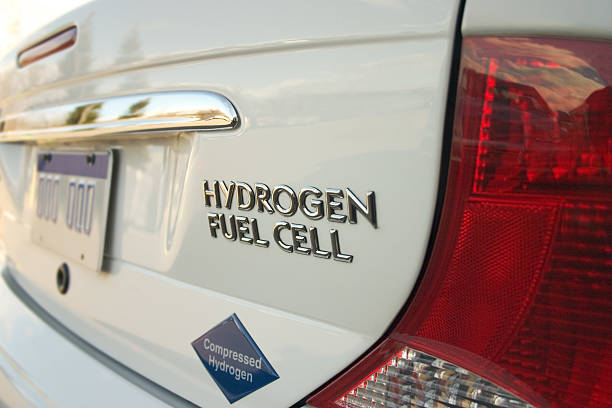
Hydrogen cars, also known as fuel cell cars, are a type of car which uses hydrogen fuel to power their electric motors. Hydrogen cars have been a dream of the automotive industry for decades. These cars, powered by hydrogen fuel cells, have been hailed as the ‘holy grail’ of clean, efficient and affordable transportation.
Early History
Hydrogen cars have been around since the early 1800s, but didn’t become a viable option until the modern era. The first hydrogen car was invented in 1807 by Francois Isaac de Rivaz. He developed an internal combustion engine powered by a mixture of hydrogen and oxygen. The engine was able to power a vehicle, but it was inefficient and only had a range of about 2 miles.
The idea of using hydrogen as a fuel was further explored in the late 1800s and early 1900s. The first real hydrogen car was built in 1899 by Canadian inventor Thomas Eugene Cahill. His car was able to travel about 10 miles before running out of fuel.
The first prototypes of hydrogen cars were then reinvented in the early 1990s. These early cars relied on internal combustion engines powered by pressurized hydrogen gas. Despite their promising potential, they never gained traction due to the high cost of producing and maintaining the vehicles.
Modern Hydrogen Cars
In the late 2000s, automakers began experimenting with hydrogen fuel cell technology. These cars used an electric motor powered by a hydrogen fuel cell stack. This technology was much more efficient and cost-effective than the earlier models, and it soon caught the attention of the auto industry.
The first commercially available fuel cell car was the Honda FCX Clarity, which was released in 2008. This car had a range of about 240 miles and could be refuelled in minutes.
In the 2010s, several automakers began producing and leasing hydrogen cars. In 2012, Honda released again the Honda FCX Clarity, the world’s first mass-produced hydrogen fuel cell vehicle. This was followed by the Hyundai Tucson Fuel Cell in 2014 and the Toyota Mirai in 2015.
Since then, the number of hydrogen cars on the road has steadily increased. Automakers continue to develop and refine their hydrogen-powered vehicles, making them more efficient and affordable. Most of these cars have a range of 300-400 miles and can be refuelled in minutes. Hydrogen cars are becoming increasingly popular due to their high efficiency and low emissions.
In the modern era, hydrogen cars have become more efficient and reliable. As the number of hydrogen cars on the roads grows, the potential for these vehicles to reduce emissions and improve air quality is becoming more and more apparent. With continued innovation and investment, hydrogen cars could be the future of green transportation.
How Hydrogen Cars Work
Hydrogen cars are seen as a potential alternative to electric cars, as they can be refueled in minutes and have a longer range than most electric cars. Hydrogen cars work by converting the hydrogen gas into electricity, which is used to power an electric motor.
The hydrogen fuel is stored in a pressurized tank, which is connected to an electric motor. When the driver presses the accelerator, the fuel is released from the tank and into the motor. The motor then uses a catalyst to split the hydrogen molecules into their component atoms.
When hydrogen gas is pumped into the car’s fuel tank, the gas is injected into a fuel cell stack. Here, the hydrogen gas is combined with oxygen from the air and split into its component parts, releasing electrons in the process. The released electrons travel through an electric circuit, powering the car’s electric motor and producing water as a byproduct.
This is the chemical reaction that produces electricity. This electricity is then used to power the motor, which turns the wheels of the car and propels the vehicle forward. The process is regulated by the accelerator pedal. When the accelerator is released, the electric motor acts as a generator, slowing the car down and sending electricity back to the fuel cell stack, where it is stored for later use.
The water is then stored and released as vapor out of the car’s exhaust pipe. The process is efficient, clean and renewable, making hydrogen cars an attractive alternative to traditional gasoline-powered vehicles.
Advantages of Hydrogen Cars
Hydrogen Cars offer a number of advantages over their gasoline counterparts, including:
- No tailpipe Emissions –
Hydrogen cars produce zero emissions since the only byproduct from the process of creating energy from hydrogen is water vapor.
- High Efficiency –
Hydrogen cars can convert up to 60% of the energy in the hydrogen fuel into usable energy. This is significantly higher than the 20-30% efficiency of gasoline-powered cars.
- Longer Range –
Hydrogen cars typically have a longer range than gasoline-powered cars, with some models able to travel up to 400 miles on a single tank of fuel.
The only byproduct of Hydrogen Cars is water vapor, which is released through the tailpipe. This makes hydrogen cars a much more environmentally-friendly alternative to gasoline-powered vehicles.
Today, Australia’s first hydrogen car has come to market, complete with its charging stations that take just 5 minutes. The car can travel 900 kilometers with its tank full. This is Hyundai Nexo, a small-cylinder car. With a charge of 6.27 kilograms of hydrogen, it purifies 449,100 liters of air during the journey. This car doesn’t emit CO2 or other pollutants. The hydrogen engine now enters the automobile market to compete with the electric vehicles.
Conclusion
Hydrogen cars have come a long way since 1807. They have become more efficient, reliable, and widely available. Hydrogen cars are becoming an increasingly popular option for eco-friendly transportation.